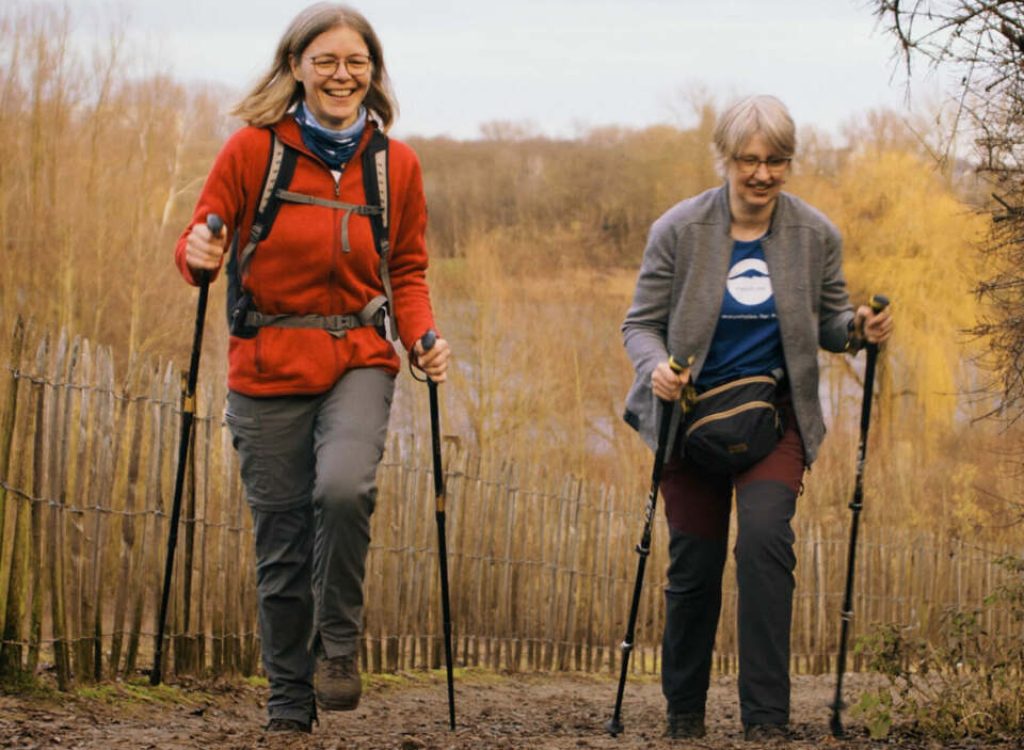
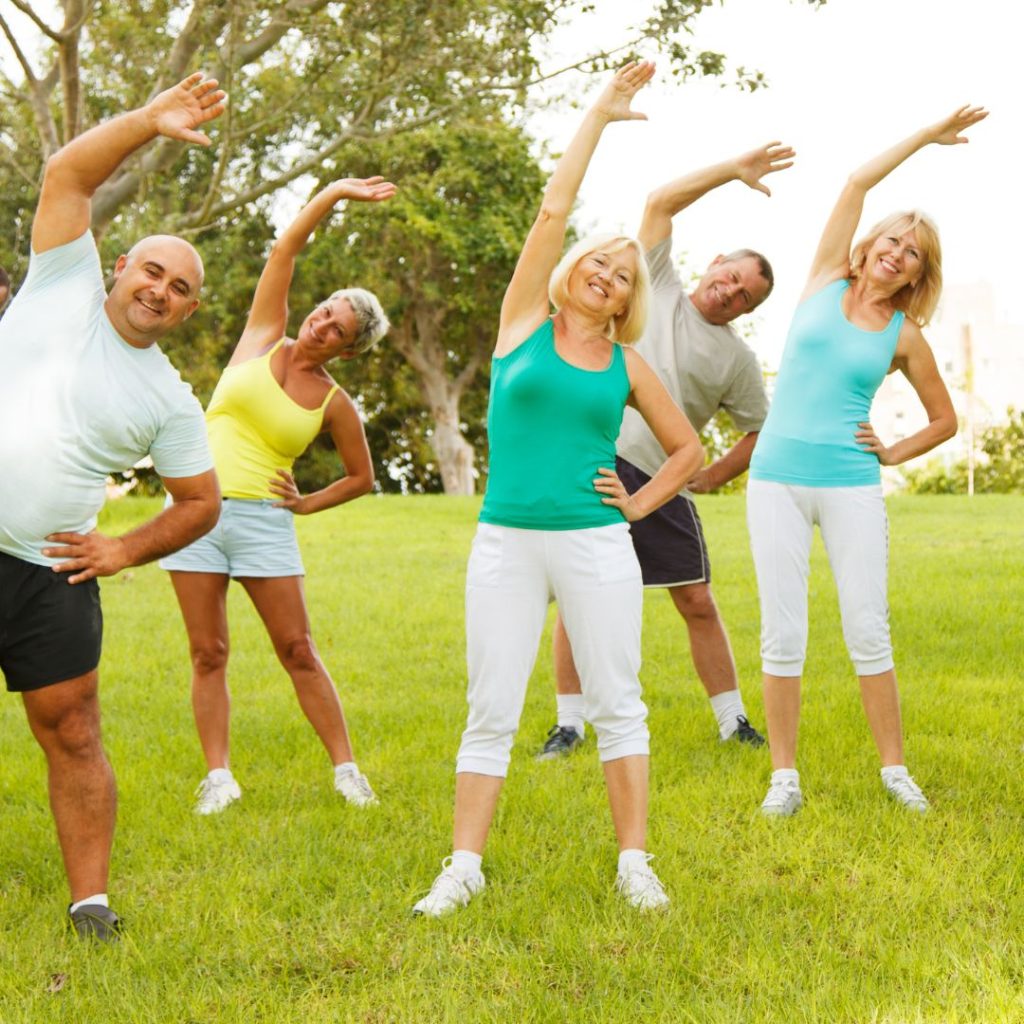
Studies have shown that exercise is helpful for people with Parkinson’s disease and it is recommended that patients maintain an active lifestyle to slow the progression of the disease, improve balance and reduce the risk of falling, and help to regulate other symptoms such as sleep and mental wellbeing.
Parkinson’s UK advises doing at least 2.5 hours of exercise a week and while some forms of exercise are particularly popular among Parkinson’s patients, including golf, dance and boxing, you need not limit yourself to these. If, for example, you like Tai Chi, table tennis, swimming, walking, running or yoga and can practice them safely, then continue with these. If you enjoy something, you are more likely to do it and doing something is better than nothing! Even walking your dog or mowing the lawn counts.
Physiotherapists may have specific exercises they can suggest to help improve your balance and range of movement and prevent freezing or muscle cramps. They can also help patients with exercises to maintain or improve speech and swallowing ability.
It is never too early to start a preventative exercise programme and if you are not feeling motivated to exercise alone, consider joining a group. As the disease progresses, physiotherapists can also help patients to find ways to compensate for the loss of motor skills and remain independent.
Vlaamse Parkinson Liga provides these additional tips for exercising with Parkinson’s:
- Move every day, at moderate intensity, for at least half an hour (walking, swimming, gentle cycling, mowing the lawn, dancing etc.) and every now and then push yourself a bit harder (faster cycling, walking, digging in the garden etc.).
- Incorporate exercise into your daily routine. Do some stretches when getting up, cycle to the shops or go for a walk after dinner.
- Don’t overdo it and be kind to yourself. Take into account your age and the stage of your illness.
- Do not experiment with your medication if you want to exercise intensively. Talk to your doctor about possibly adjusting your medication schedule. Do the same if you experience fatigue or reduced mobility after physical exertion.
- Use aids such as a walking stick or walker, if necessary.
Additional resources:
- French:
Action Parkinson provides weekly adapted activities in Brussels https://www.actionparkinson.be/agenda-des-activites/
Parkinson’s Quebec offers YouTube videos with a physiotherapist : https://www.youtube.com/watch?v=dnZEpJfr44c&list=PLjf2Eo8LqwK15ef_OUIDCjXxOAzikb0fG
- English:
Parkinson’s UK offers videos of low, mid and high-intensity exercises you can do at home https://www.parkinsons.org.uk/information-and-support/exercising-home-parkinsons-your-toolkit
Michael J. Fox Foundation has a podcast looking at how exercise can help Parkinson’s patients: https://www.michaeljfox.org/podcast/podcast-how-can-exercise-help-manage-parkinsons
- Dutch:
Vlaamse Parkinson Liga provides a link to a panel discussion about the importance and type of exercises that can help Parkinson’s patients: https://www.parkinsonliga.be/leven-met-parkinson/bewegen
This article draws upon guidance and suggestions provided by Parkinson’s organisations in Belgium, the United States, Canada, the United Kingdom, the Netherlands and France. It aims to provide an overarching view of available advice but can not possibly be comprehensive. We encourage you to visit the websites of your local or regional organisations as these may have specific information suited to your particular needs.